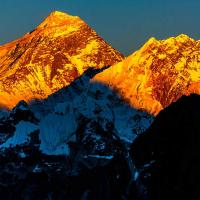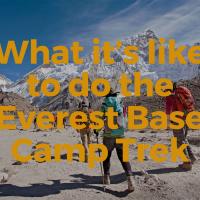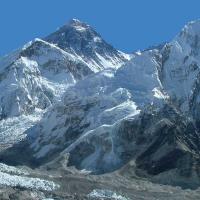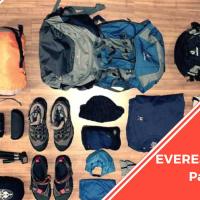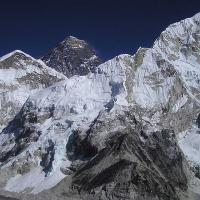
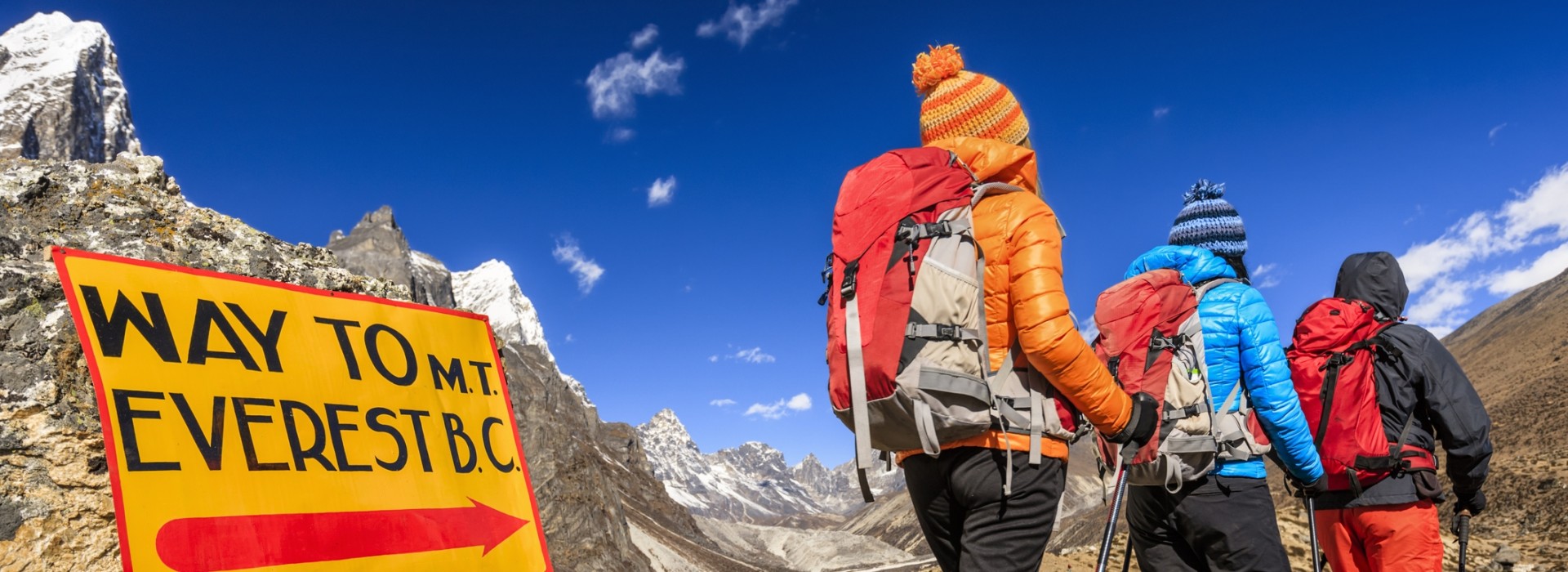
The Everest Base Camp Trek is a legendary Himalayan journey that takes you deep into the heart of the Khumbu region, home of the Sherpa people and the world’s highest mountain, Mount Everest (8,848.86 m). This classic 14-day trek is carefully designed to balance adventure, acclimatization, and cultural immersion, ensuring a safe and rewarding experience for trekkers of varied fitness levels.
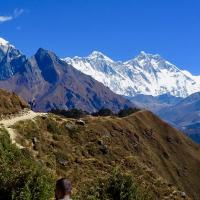
Starting with a scenic flight to Lukla, the trail winds through lush valleys, roaring rivers, suspension bridges, and traditional mountain villages before gradually entering the high alpine landscape of the Everest region. Along the way, trekkers enjoy breathtaking views of Everest, Lhotse, Nuptse, Ama Dablam, Thamserku, and Pumori, while experiencing the rich Buddhist culture of the Sherpa community.
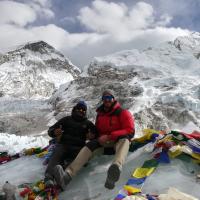
Reaching Everest Base Camp (5,364 m) is a moment of pure achievement, followed by a sunrise hike to Kala Patthar, the best viewpoint for close-up views of Mount Everest. With two acclimatization days and experienced local guides, this trek is both demanding and deeply fulfilling.
Every great journey begins with a single decision. The Everest Base Camp Trek is not about reaching the summit of a mountain—it is about discovering your own strength along the way. Step by step, you walk through ancient trails, across high suspension bridges, and into the heart of the Himalayas, guided by the rhythm of the mountains.
From the first flight into Lukla to the quiet moments beneath towering peaks, this journey unfolds at a pace that allows you to adapt, reflect, and grow. Each day brings new landscapes, new challenges, and unforgettable moments—until one day, you find yourself standing at Everest Base Camp, surrounded by the giants of the earth.
This is more than a trek. It is a personal milestone, a story written with effort, patience, and awe.
Could this be the journey that becomes your Everest story?
The Everest Base Camp Trek is a moderate to challenging adventure, but it is surprisingly accessible to many first-time trekkers. You don’t need technical climbing skills or prior mountaineering experience—just a reasonable level of fitness, determination, and the ability to walk for several hours a day with a light backpack.
Over 11 days on the trail, you will typically walk between 3 to 8 hours per day, gaining 400–600 meters in elevation daily. The highest point of the trek is Kala Patthar at 5,545 m, offering unmatched panoramic views of Everest and surrounding peaks. The route is mostly gentle with some steeper sections and downhill descents, along unpaved gravel paths, so no technical maneuvers are required.
With a carefully planned itinerary that includes acclimatization days, your body has time to adapt to altitude—key for both safety and enjoyment. Our experienced trekking guides monitor pacing, blood oxygen levels, and altitude-related symptoms, adjusting the trek as needed so you can focus on the experience rather than the challenge.
If you are reasonably healthy, able to climb stairs, and comfortable walking for a few hours at a time, this trek is achievable—and incredibly rewarding. Along the way, you will rest and dine at local mountain lodgings known as teahouses; thus immerse yourself in Sherpa culture, and enjoy some of the most iconic landscapes in the world.
The ideal time to trek to Everest Base Camp depends on the kind of experience you want to create. Each season offers something unique, shaping your journey in the Himalayas.
Spring (March–May) brings vibrant rhododendron blooms, crisp mountain air, and the excitement of climbing season at Base Camp. It’s a popular period, so early bookings for flights and teahouses are recommended.
Autumn (September–November) is considered the most scenic season, with clear skies, golden landscapes, and generally excellent visibility. Festivals across Nepal add cultural richness, making this a favorite time for many trekkers.
Winter (December–February) is colder and quieter, offering serene trails, fewer crowds, and crystal-clear views of the mountains. It’s perfect for those seeking solitude and best scenery.
Summer/Monsoon (June–August) paints the mountains lush and green, with waterfalls, wildflowers, and dramatic skies. Trekkers during this season should allow flexibility for flights and must carry proper rain gear.
Seasonal differences also influence teahouse availability, trail traffic, and so choosing when to trek is about more than just weather—it’s about crafting the Everest experience that suits your pace, comfort, and personal adventure.
| Day | Highlight | Overnight |
|---|---|---|
| Day 1 | Arrival in Kathmandu(1,350m/4,429ft) | Kathmandu |
| Day 2 | Fly Kathmandu to Lukla (2,860 m/9,383ft) and trek to Phakding (2,652 m/8,700 ft) | Phakding |
| Day 3 | Trek from Phakding to Namche Bazaar (3,440m/11,283ft) | Namche Bazaar |
| Day 4 | Acclimatization Day at Namche Bazaar, a side walk to Everest View Hotel (3,962m/12,995ft) | Namche Bazaar |
| Day 5 | Trek from Namche Bazaar to Tengboche (3,860 m/12,660ft) | Tengboche |
| Day 6 | Trek from Tengboche to Dingboche (4,410 m/14,464ft) | Dingboche |
| Day 7 | Acclimatization day at Dingboche and side trip to Nagarjun hill (4,900m/ 16,076ft) | Dingboche |
| Day 8 | Trek from Dingboche to Lobuche (4,910 m/16,105ft) | Lobuche |
| Day 9 | Trek from Lobuche to Gorakshep (5,181 m/16,994ft) to EBC (5,364m/17,594ft) and return Gorakshep | Gorakshep |
| Day 10 | Hike to Kalapatthar (5,643m/18,514ft) and Back to Pheriche (4,371 m/14,340 ft) | Periche |
| Day 11 | Trek from Periche to Namche Bazaar (3,440m/11,283ft) | Namche |
| Day 12 | Trek from Namche Bazaar to Lukla (2,860m/9,383ft) | Lukla |
| Day 13 | Fly back to Kathmandu (1,350m/4,429ft) | Kathmandu |
| Day 14 | Final departure |
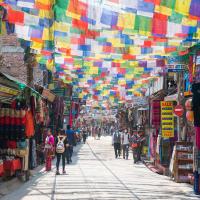
Upon your arrival in Kathmandu, our representative will warmly welcome you at the airport and escort you to your hotel. Our airport representative will let you know time for your pre-trek meeting/briefing before you check-in. After some rest, you’ll meet your trek leader and fellow team members for an informative briefing about your upcoming Everest adventure. This is the perfect time to ask any questions, check your gear, or take care of any last-minute shopping. You can also enjoy a leisurely stroll through Thamel, Kathmandu’s vibrant tourist hub.
We recommend planning your arrival in Kathmandu during the morning, allowing ample time to rest and recover from jet lag before the adventure begins. Since you have an early morning flight to Lukla tomorrow, arriving early will ensure you can attend the pre-trek briefing and start your Everest journey fully prepared and refreshed.
Your Everest adventure kicks off with an exciting flight to Lukla, a picturesque Sherpa settlement perched in the mountains.
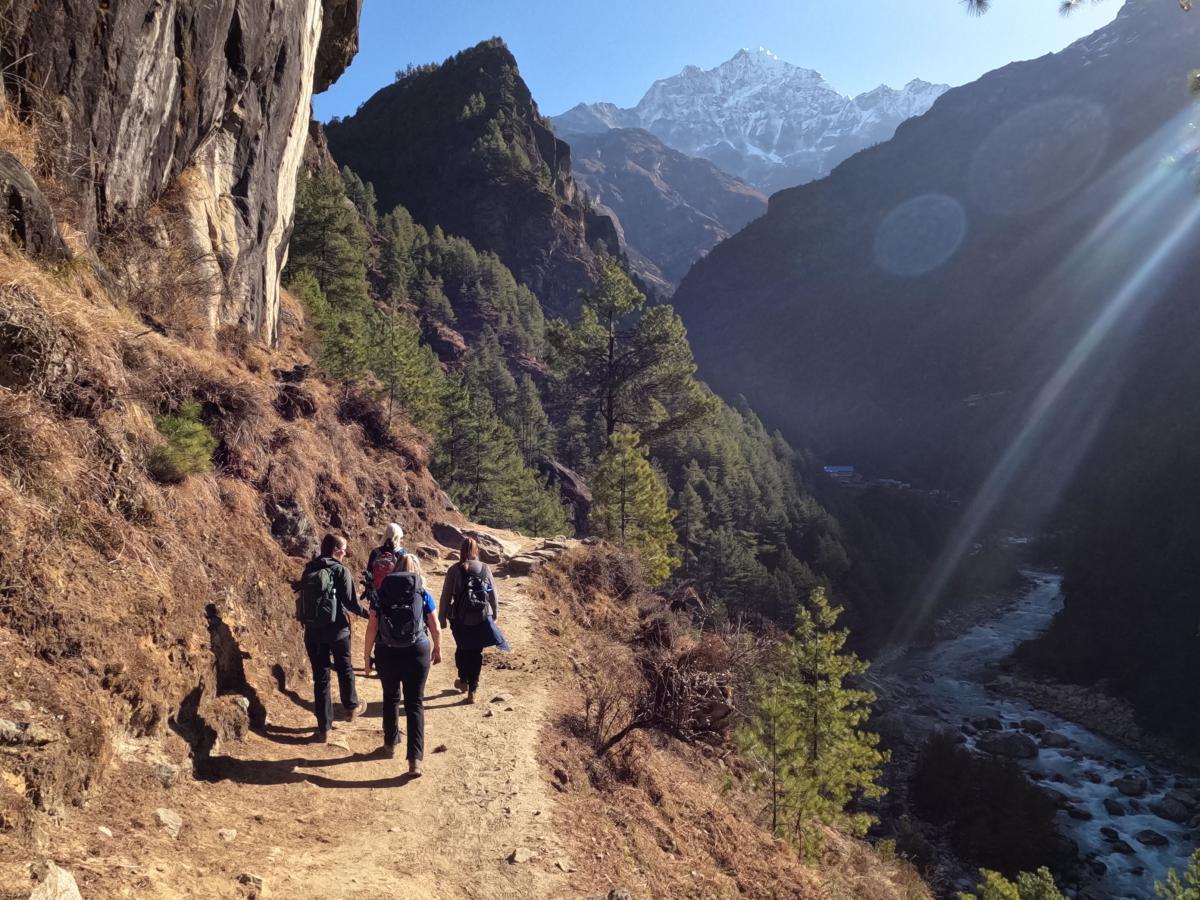
From Lukla, begin your trek through Chauri Kharka village, descending gently toward the Dudh Koshi River. The scenic trail follows the riverbank, leading to Phakding (2,610m), a charming village nestled in the lush Dudh Koshi Valley. Along the way, you’ll catch your first glimpse of Khumbila, a sacred and unclimbed peak revered by the Sherpa people.
Once in Phakding, take some time to explore the village or nearby monastery (30 minutes uphill climb) or interact with the locals, or relax at a cozy café with a warm drink before your trek continues the next day.
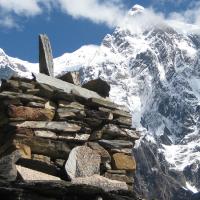
After breakfast, set off from Phakding toward Namche Bazaar, famously known as the “Sherpa capital” of Nepal. As you approach Sagarmatha National Park, your permits will be checked at the park entrance, marked by stone steps and large mani stones. The trail initially follows the Dudh Koshi River, crossing several suspension bridges. Arriving at Jorsale, you’ll stop for lunch and a short rest.
After crossing iconic Hillary Suspension Bridge, the challenging ascent toward Namche Bazaar begins. If the weather is clear, catch your first view of Mount Everest from a vantage point near Top Danda, an unforgettable moment that signals the grandeur of the mountains to come.
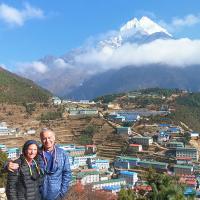
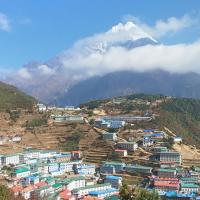
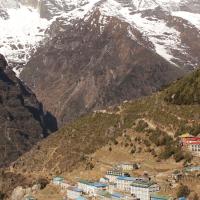
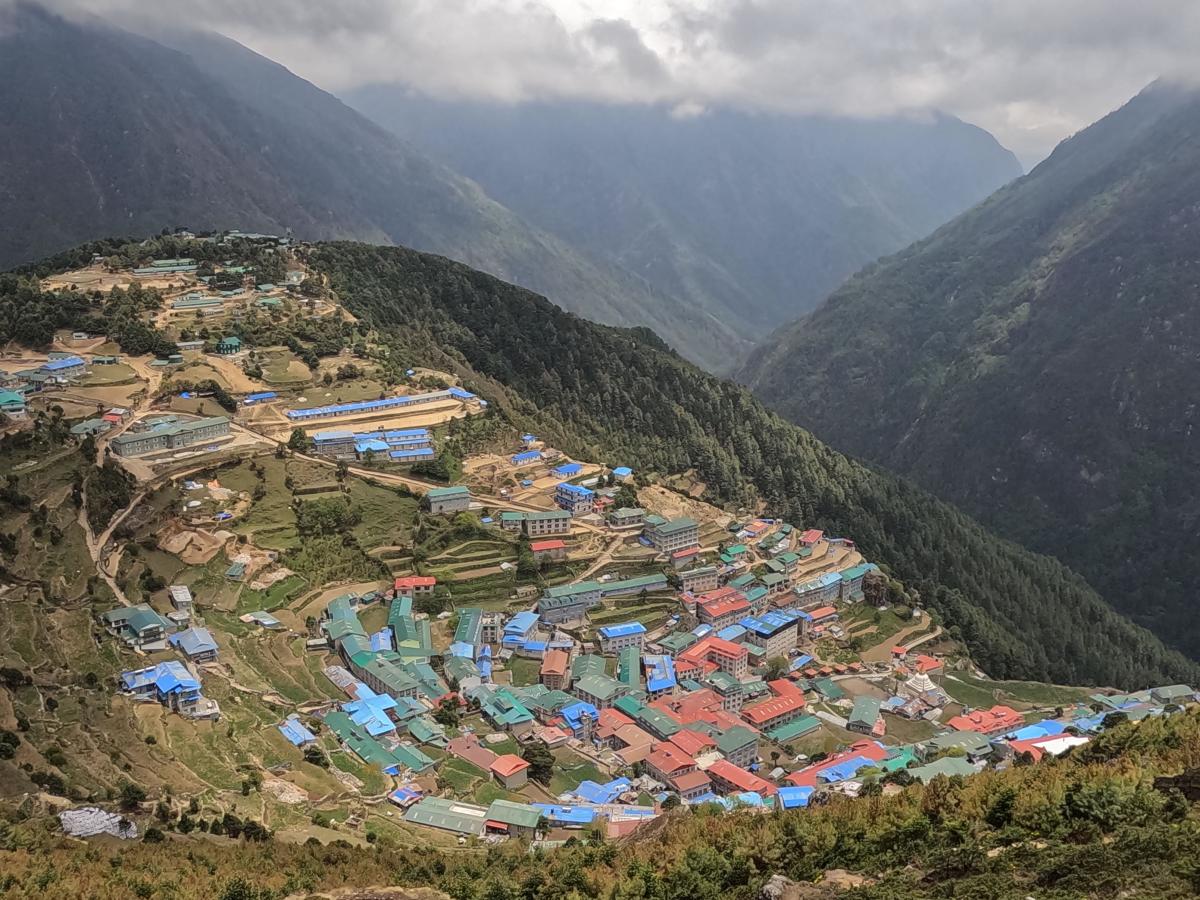
As you reach Namche Bazaar, the village unfolds like a natural amphitheater, bustling with shops, cafés, bakeries, and lodges. Your trek leader will guide you to your comfortable lodge, featuring cozy rooms and a warm dining area, perfect for relaxing after a rewarding day of trekking. Enjoy dinner and a well-deserved night’s rest, preparing for the acclimatization days ahead.
Today is a rest and acclimatization day at Namche Bazaar, an essential step to help your body adjust to the high altitude. While this day is lighter than the previous day, it includes a gentle 3 to 4-hour hike, allowing you to gradually adapt to the thinner mountain air while exploring the surrounding area.
Start your morning with a hearty breakfast before heading out on a short trek to nearby viewpoints. A popular destination is Syangboche (Everest View Hotel, 3,880m), offering spectacular panoramic views of some of the world’s tallest peaks, including Mount Everest, Ama Dablam, Nuptse, and Lhotse. Along the way, you’ll pass the Hillary Museum and the statue of Tenzing Norgay, learning more about the legendary mountaineers of the region. Reaching 3,880m helps your body adjust to higher altitudes, preparing you for the next stages of your trek. You can aslo visit 'Sagarmatha Next' along the way.
This day also provides time to explore Namche Bazaar, the vibrant hub of the Khumbu region. Wander through local shops, cafés, and the Sherpa Museum, and enjoy interactions with friendly locals. Capture stunning photographs, soak in the unique Sherpa culture, and enjoy a warm cup of tea as you take in the Himalayan panorama.
By combining gentle trekking with rest, this acclimatization day ensures your body is well-prepared for higher altitudes, making the upcoming days of the Everest Base Camp trek safer and more enjoyable.
Leaving Namche Bazaar, we begin our trek to Tengboche, a picturesque Sherpa village famous for its spiritual and cultural significance. Today’s trail is a wonderful blend of natural beauty and local heritage, with Buddhist monuments, stupas, and small gompas dotting the path.
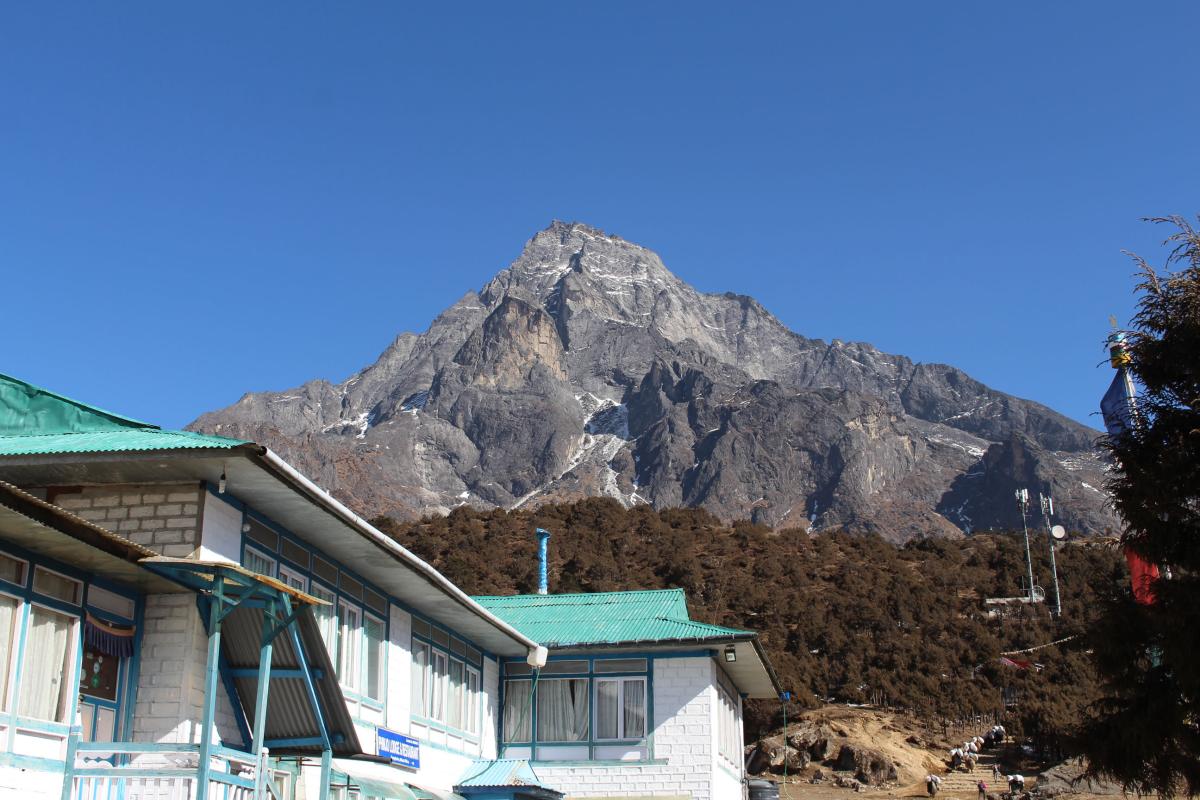
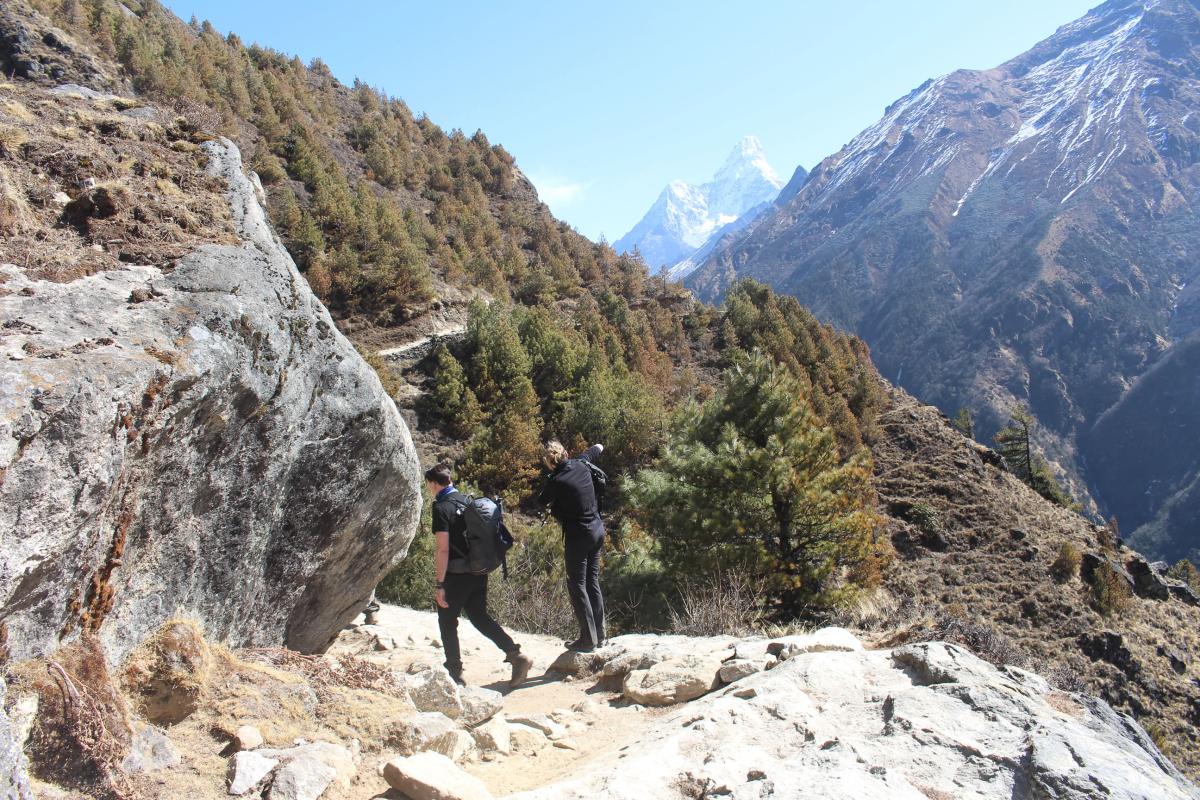
The trek is easy until Kyangjuma and short ascend to Phunki Thenga where you will have lunch. Along the way, enjoy your first close-up view of Mt. Ama Dablam, one of the most stunning peaks in the Himalayas, as well as glimpses of other towering giants including Everest, Lhotse, Nuptse, Thamserku, and Kwangde. From Phunki Tenga trail gradually ascends through dense rhododendron and juniper forests, where the scent of pine and earth fills the air.
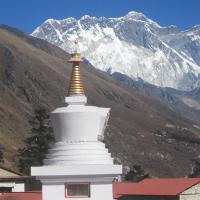
Arriving at Tengboche, you’ll visit the Tengboche Monastery, the largest Buddhist monastery in the Khumbu region. The monastery exudes a deep sense of calm—listen to the hypnotic chants of the monks, observe daily rituals, and feel the peaceful energy of this sacred place.
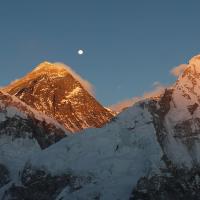
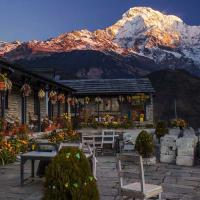
Tengboche also offers one of the best panoramic viewpoints in the Khumbu region, providing striking views of Everest, Ama Dablam, and Thamserku. As the day transitions to evening, watch the golden rays of the setting sun illuminate the snow-capped peaks, creating a magical Himalayan spectacle.
After a delicious dinner at the teahouse, retire to your cozy room for a restful night, surrounded by the serenity of the mountains. Today’s trek combines cultural immersion, spiritual experiences, and breathtaking Himalayan vistas, making Tengboche one of the most memorable stops on your Everest Base Camp journey.
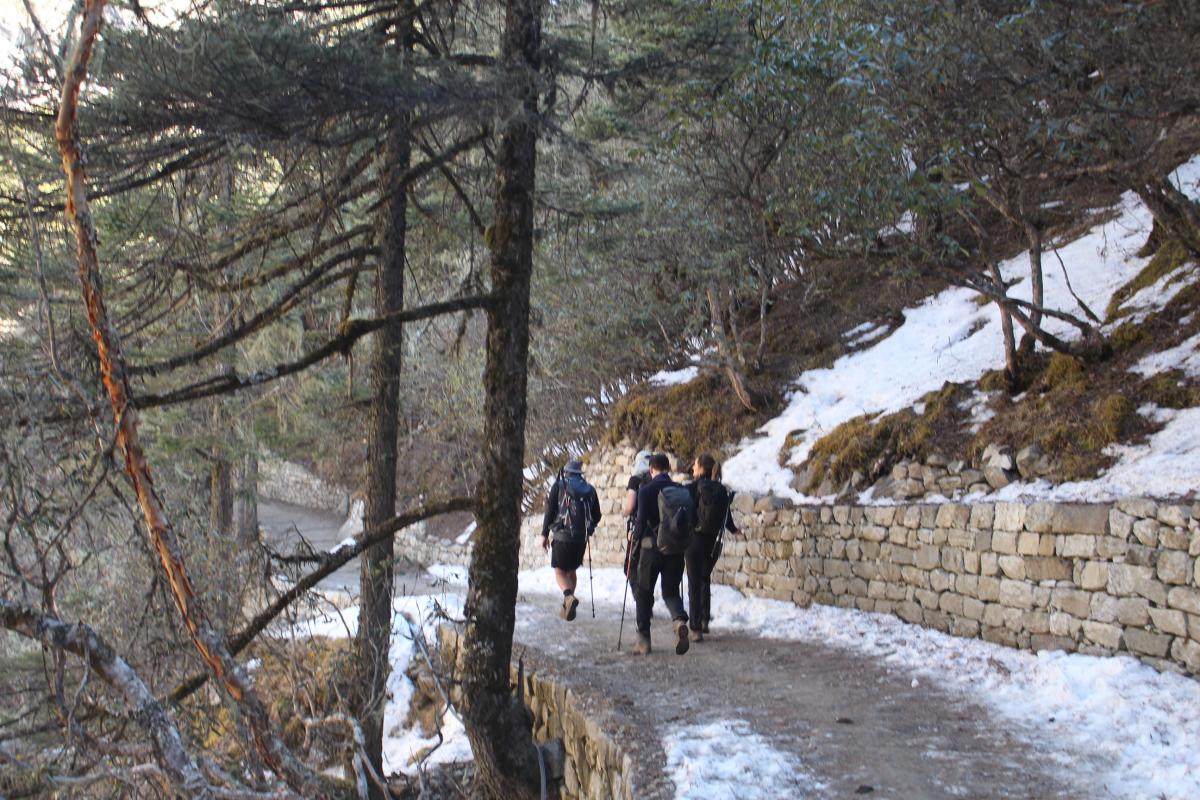
Wake up early in Tengboche and let the morning light fill your eyes and heart with the serene beauty of the village and surrounding peaks. Leaving this peaceful settlement, the trail gently descends through pine and rhododendron forests, gradually opening up to magnificent views of the towering Himalayan giants.
Today’s trek follows the Imja Khola Valley, a scenic route adorned with mani walls, fluttering prayer flags, and traditional Sherpa settlements. Along the way, you’ll pass through charming villages such as Deboche, Pangboche, and Somare, each offering glimpses into the local way of life.
As the trail ascends toward Dingboche, the landscape transforms into an alpine valley surrounded by spectacular peaks, including Ama Dablam, Lhotse, and Island Peak (Imja Tse). Dingboche is a wide, fertile valley dotted with stone-built lodges and terraced fields, making it an ideal stop for rest and acclimatization.
Upon arrival, relax at a cozy teahouse with a warm drink while soaking in the breathtaking panoramic views. At this higher altitude, some trekkers may experience symptoms of altitude sickness, but these are usually temporary. Drinking plenty of warm fluids, resting, and taking it slow will help your body adjust, preparing you for the challenging days ahead toward Lobuche and Everest Base Camp.
Today is a rest and acclimatization day in Dingboche, giving your body time to adjust to the higher altitude. This is your second acclimatization stop, an important step before continuing toward Lobuche and Everest Base Camp. Dingboche is a popular hub for trekkers and climbers heading to Mount Everest, Ama Dablam, or Island Peak (Imja Tse), and there’s plenty to explore here.
After breakfast, embark on an acclimatization hike to Nagarjun Hill (5,100m). The trail involves a steady upward climb, though some areas may have loose rocks, requiring careful footing. Beyond the altitude, there is little to worry about, making this an ideal hike to help your body adapt.
Nagarjun Hill, named after a Buddhist hermitage perched on the slope, offers one of the best panoramic viewpoints in the Khumbu region. From here, enjoy incredible 360-degree views of the surrounding Himalayan giants, including Ama Dablam, Lhotse, Makalu, Kangtega, and Thamserku. Ama Dablam is particularly striking, visible from its base to the summit, and you’ll also get a close-up look at the Imja Glacier and Island Peak.
In the late afternoon, return to Dingboche to rest or explore the village, soaking in the serene alpine atmosphere and preparing your body for the challenging trek ahead.
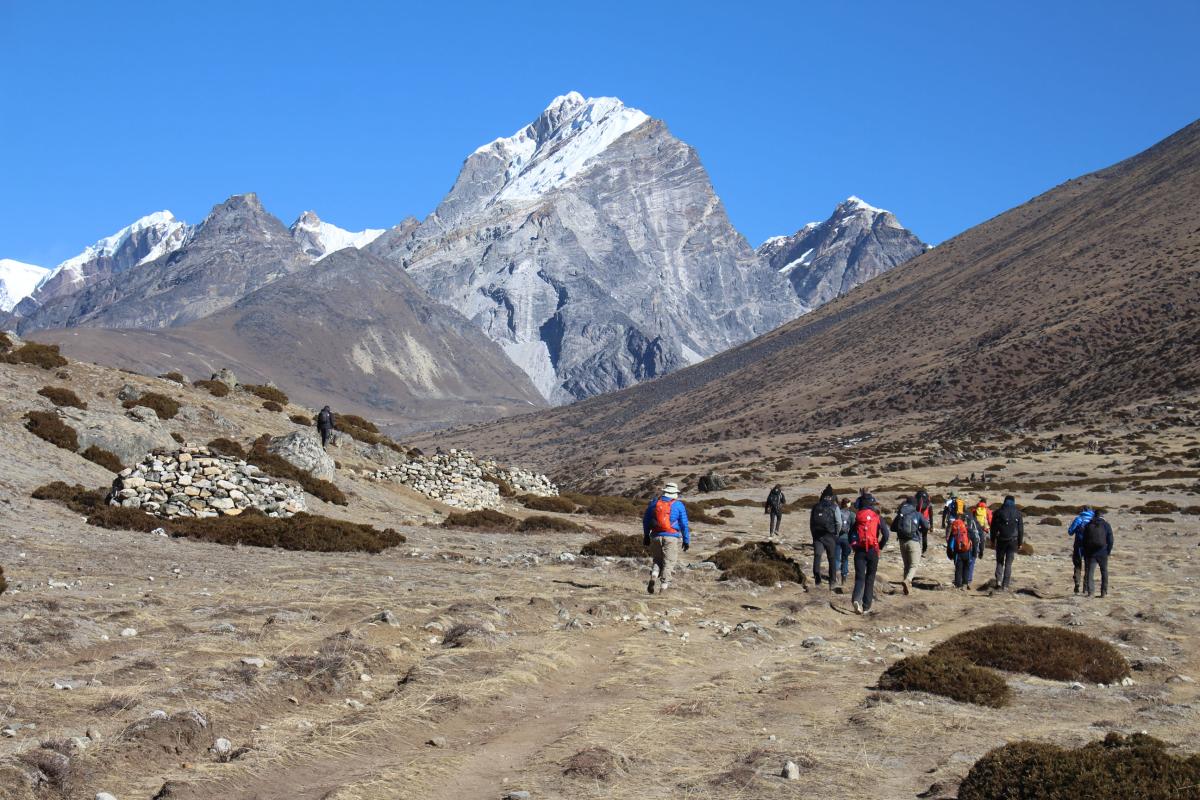
Our journey commences after breakfast towards Lobuche. Initially, the journey passes windy pastures and small huts of yak herders surrounding the Himalayas.
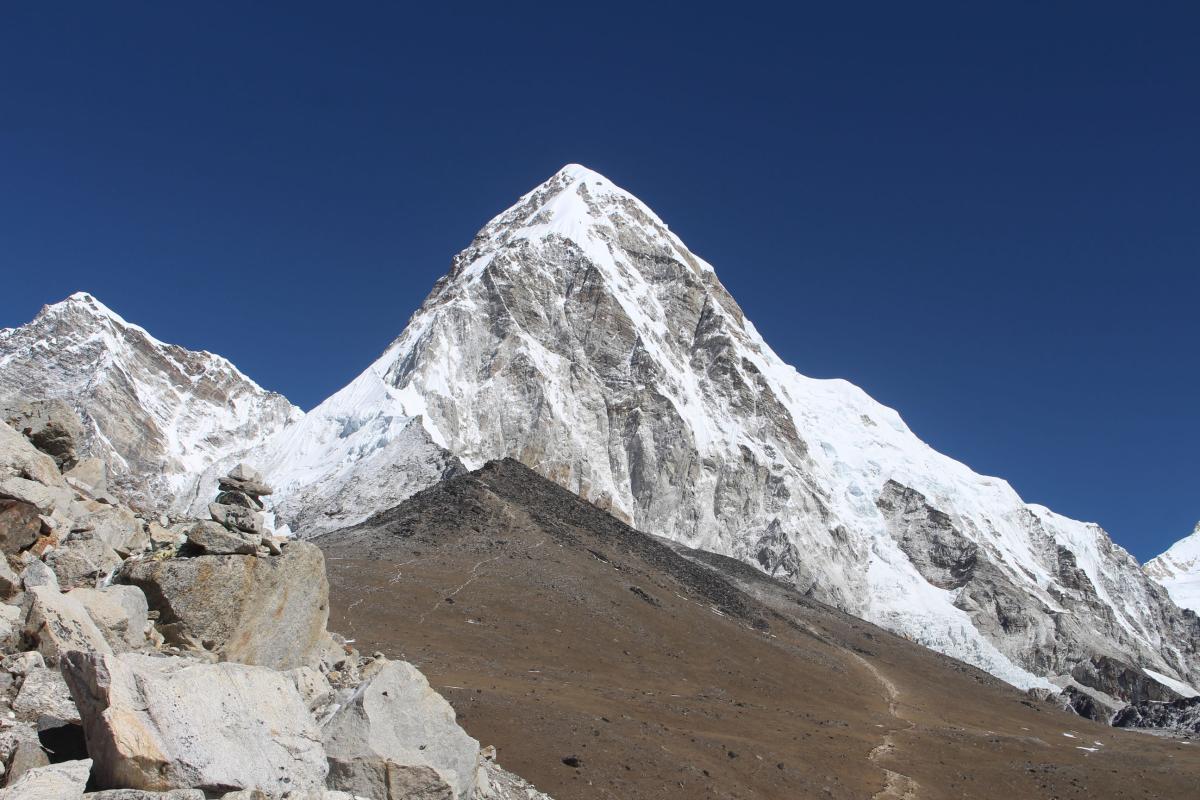
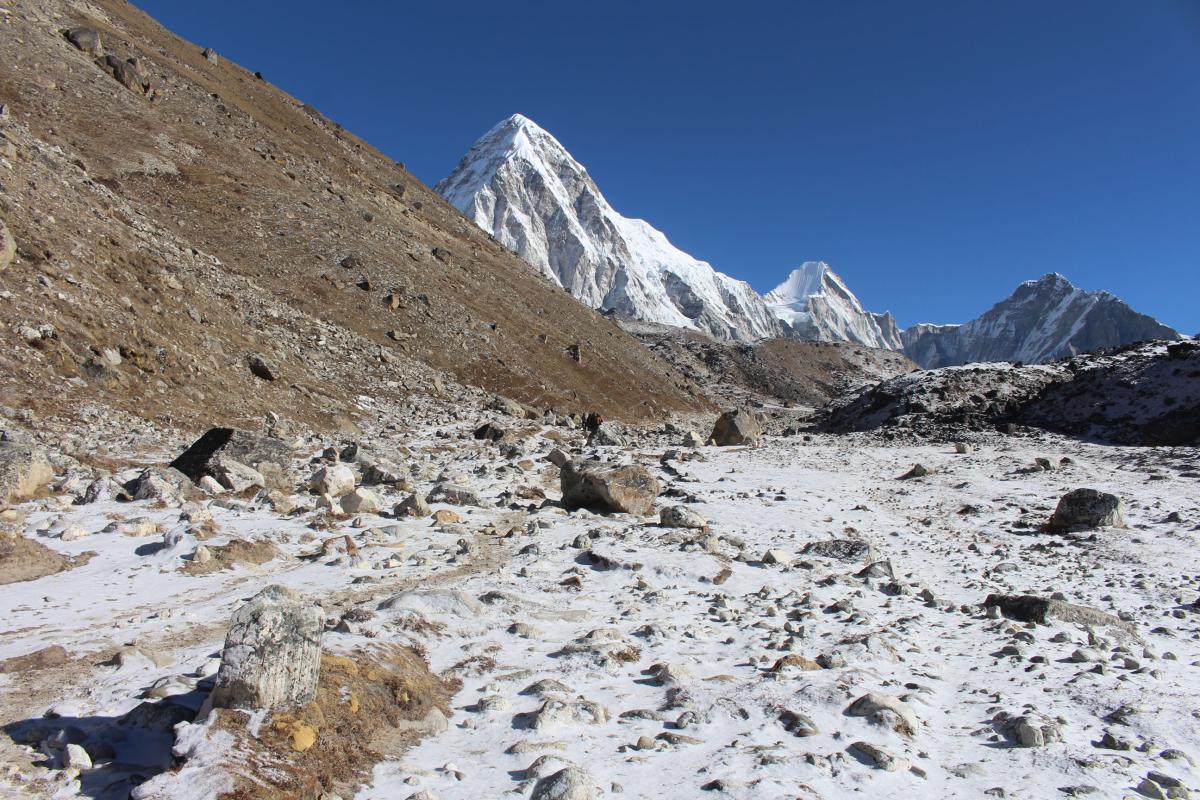
You are in an alpine atmosphere where distributed shrubs and rocky, snow-dusted grasslands are placed instead of extensive pine forests. However, the regal view of Mt. Pumori is breathtaking.
Now the trail becomes narrower. Passing a stream, we ascend Dugla. This is a tiny valley with prayer flags and coronets everywhere. Continuing the journey, we will give a steep terminal moraine of Khumbu Glacier. Climbing moraine is a bit technical; you should follow your leader correctly.
Reaching the top, numerous prayer flags and stones can be seen as the remembrance of the people who lost their lives in the peaks. Having the picturesque views and some rest, we continue our journey downwards, reaching Lobuche.
Lobuche is a small Sherpa settlement in the shadow of Lobuche and other neighboring peaks. Breathtaking views of peaks, including Lobuche, can be captured from different angles.
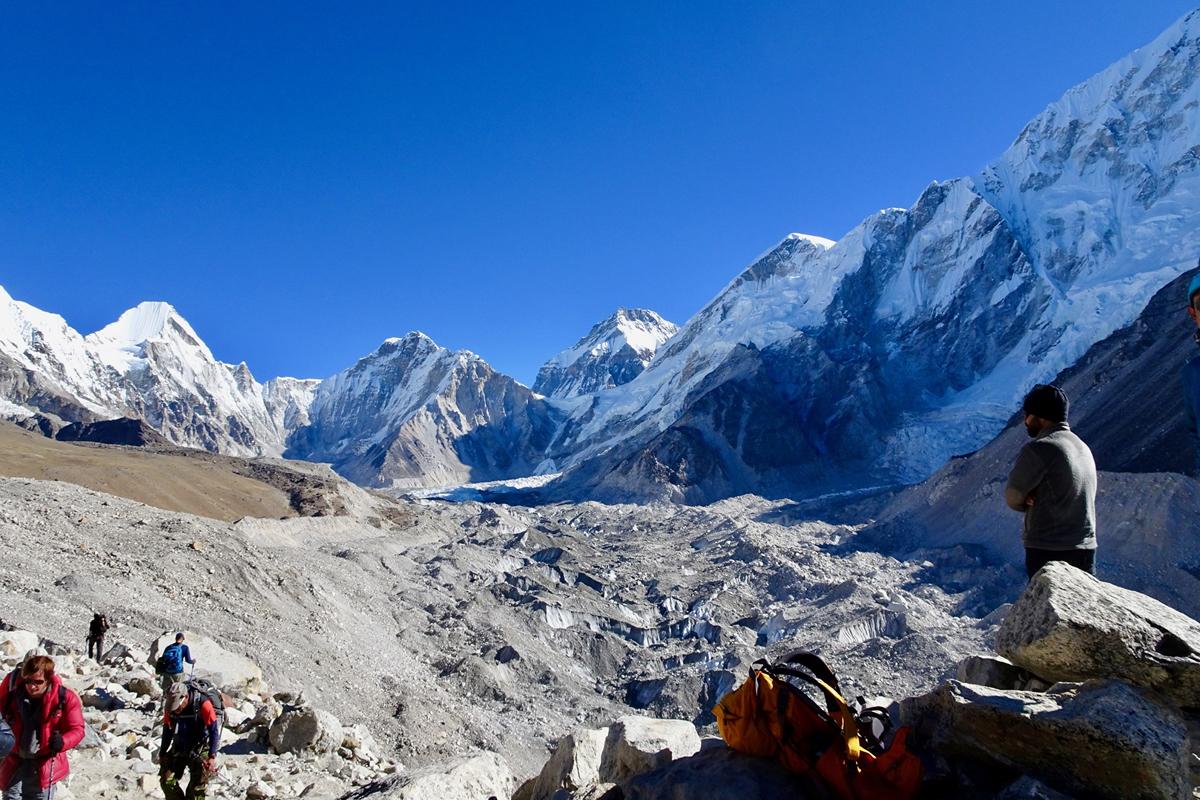
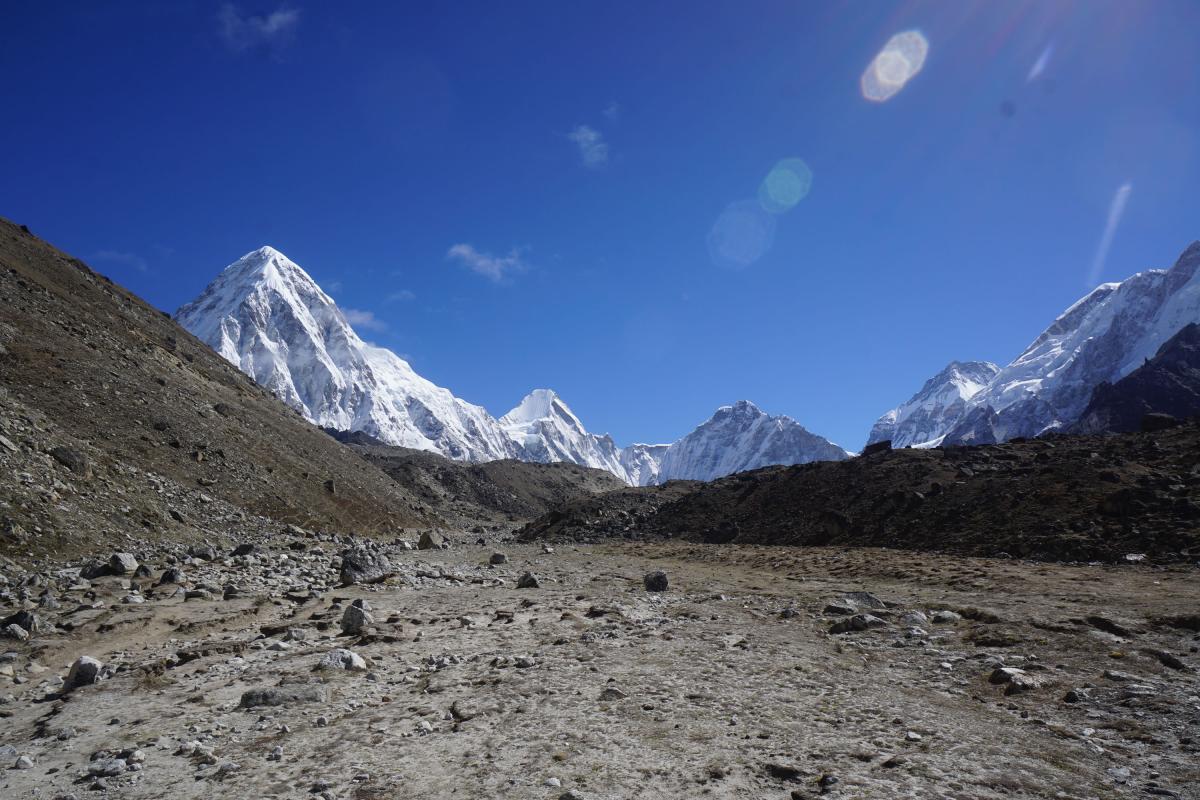
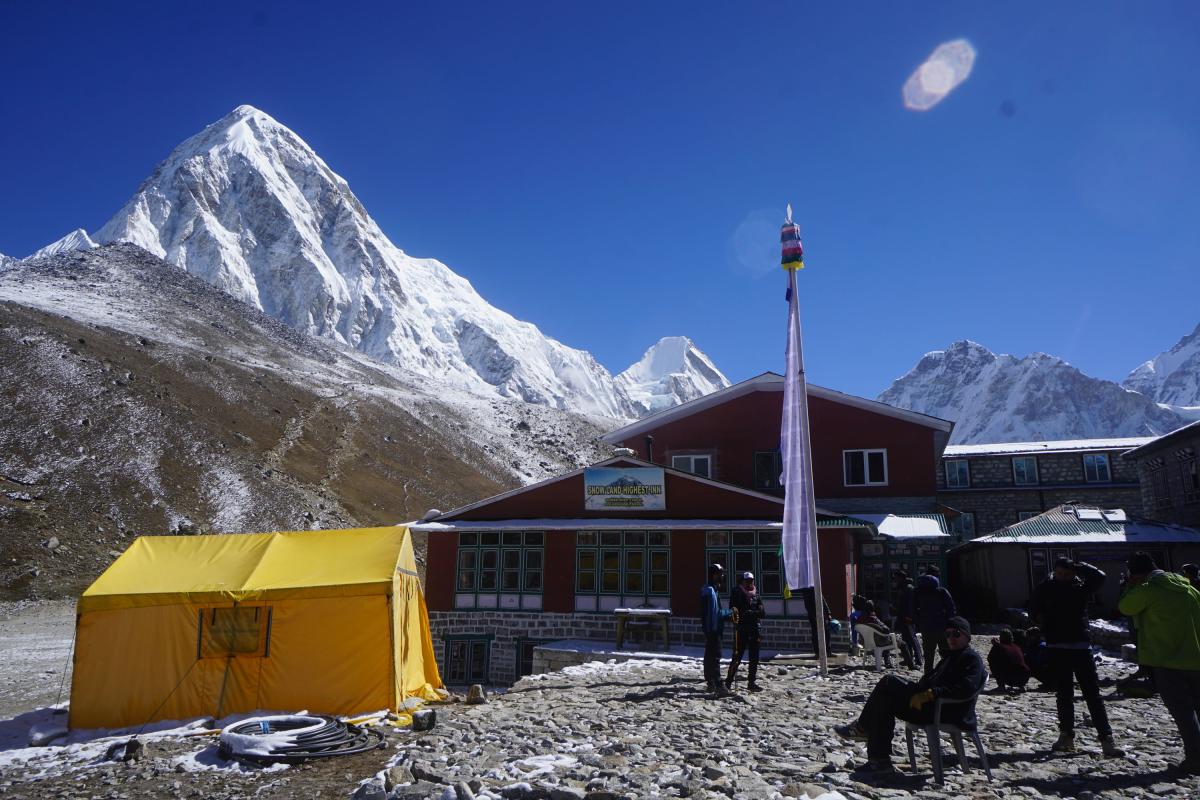
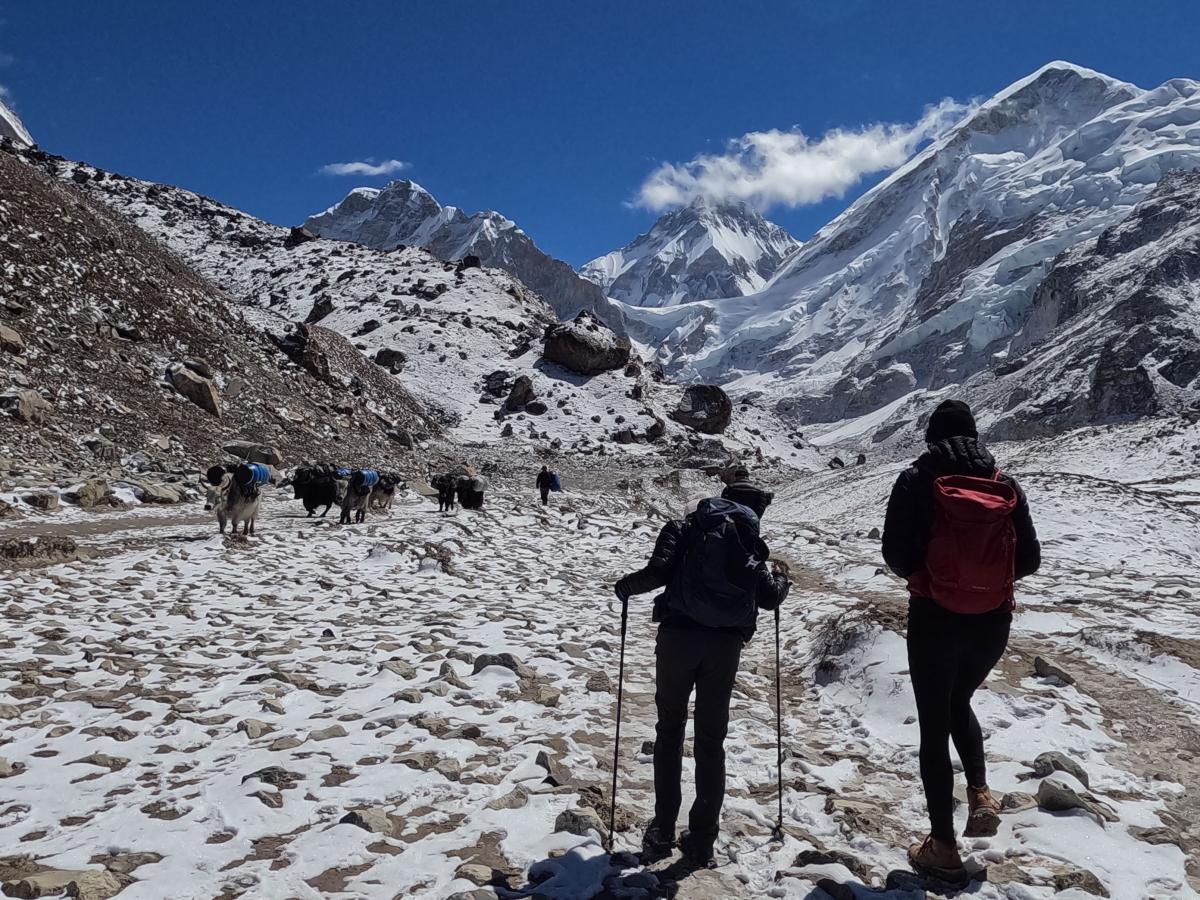
The most important day of the trek is ahead. After breakfast, our journey continues following flat meadows. Shortly after, we head northward, following Khumbu Glacier. Finally, climbing onto the lateral moraine, we land Gorak Shep. On the way, we get panoramic views of snow-clad peaks and Khumbu glaciers.
Checking in the teahouse for an overnight stay, we get our lunch. Subsequently, we head towards Everest Base Camp leaving our backpacks there. Gradually walking upward via the moraine of Khumbu Glacier, we reach our most awaited destination-EBC.
One shall get vivid panoramic views of mount Khumbuste, mount Pumori and mount Nuptse keeping Mt. Everest in the background. Standing here, trekkers get the mixed sensation of shifting emotions that a dream has come true.
With the mesmerizing view of Khumbu Icefall, we capture some charming ideas. Then, spending some time on the base of the tallest peak in the world, we get back to Gorak Shep.
Starting up early morning, we head upward to capture the first rays of the sun over snowy peaks. Cold temperature, chilly winds, and contented pace take us to Kalapatthar.
Kalapatthar is the perfect viewpoint of the Himalayas, glaciers, and icefall. 360-degree, close-up views of Mt. Everest, Nuptse, Lhotse, Lingtren, Khumbutse, and Changtse and other mountains, Khumbu icefall, and Khumbu glacier make the journey special.
Capturing some snapshots of the gleaming peaks and surroundings, we return to Gorakshep. After lunch, we head back to Periche.
One of the longest days is ahead. After an early meal, we head towards Namche, following steep downhill, along rhododendron and juniper woodlands, and uphill in some places. Diverse flora and fauna, along with the scenic views of the tall pinnacles, can be witnessed on the trek.
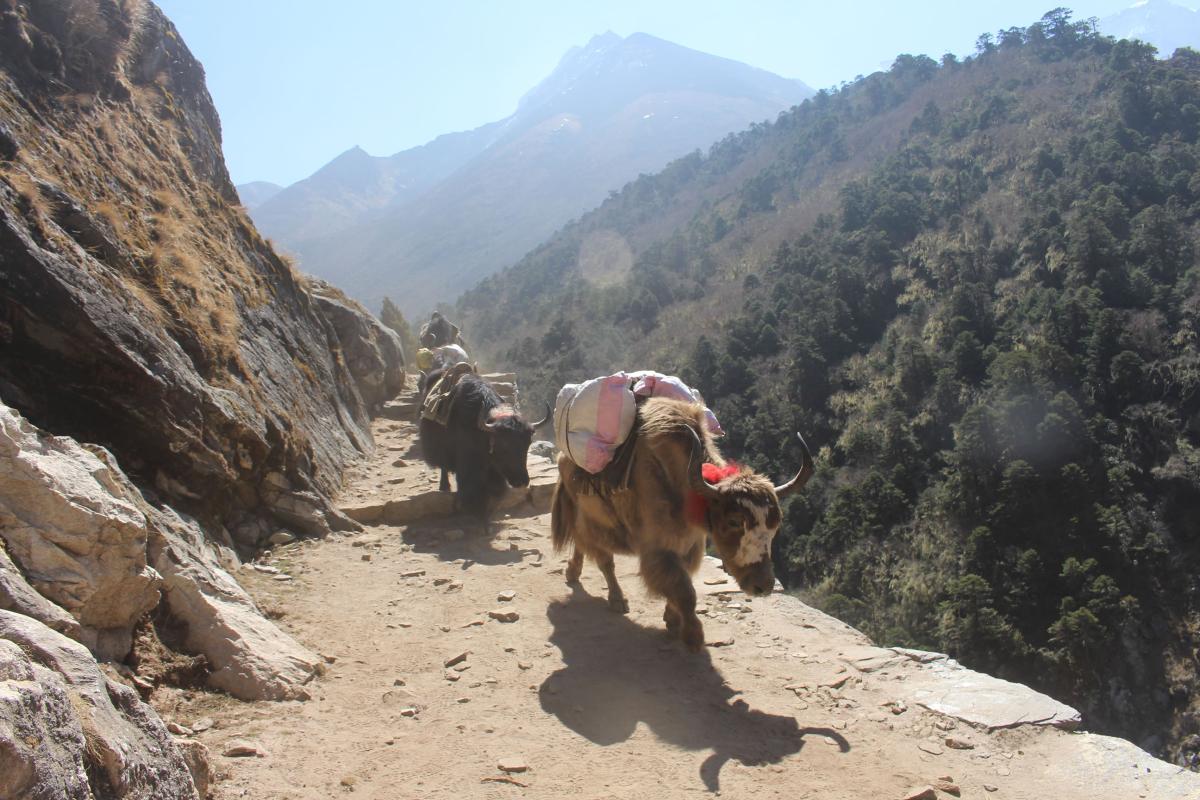
The groups of trekkers, climbers, and other domestic animals make the way very busy. Bridges, zigzag landscapes, tiny settlements, hospitable people, and religious monuments make the journey more attractive.
After the long journey, you reach the capital of Sherpa territory. Checking in the teahouse, we relax our exhausted bodies after the yummy dinner.
We have the ultimate day's walk ahead. The trek continues after the first meal at Namche Bazaar. Following the way we ascended, we head back to Jorsalle, Manjo, Benkar, Phakding, and finally to Lukla.
We cross many suspension villages, rocky trails, and diverse terrains on the way. Sharing our experiences of the journey, we reach Lukla. After hotel check-in, our leader processes for flight. We relax our bodies with some refreshment drinks. Enjoy the last night in the lap of the Himalayas.
With the first meal at Lukla, we board an airstrip for the morning flight to Kathmandu. After spending 30 minutes, the aircraft lands at TIA, Kathmandu.
Upon arrival, you will be shifted to your hotel. The rest of the time, enjoy exploring around you. You will participate in a farewell dinner organized by Holy Mountain Treks in the evening.
An epic journey is ended up, and it's time to depart from Kathmandu. One of the representatives from Holy Mountain Treks will drop you at the Tribhuban International Airport 3 hours before the scheduled flight.
Everest Base Camp is located at the base of the tallest peak of the world Mt. Everest 8,848 meters /29,029 feet). It situates in the Khumbu region, Sololukhumbu district of northeast Nepal.
Everest Base Camp Trek FAQs
Flights & Weather
Q: The weather forecast says rain, clouds, or snow in Lukla on our flight day. Will the flight be affected?
A: Lukla flights are highly weather-dependent. While pilots are experienced, flights can be delayed or rescheduled if visibility is poor. It’s common to have a flexible schedule for your first day in Lukla, so occasional delays are expected.
Q: Why do flights to Lukla depart from Ramechhap instead of Kathmandu?
A: During peak trekking time, flights to Lukla are operated from Ramechhap airport mainly due to air traffic in Kathmandu. Additionally, Kathmandu’s airspace is often congested, leading to delays, while Ramechhap experiences much less air traffic. From Ramechhap only flights to Lukla are operated.
The airstrip is closer to Lukla, which means a shorter flight and less time exposed to mountain weather conditions, making the schedule more faster and reliable. This combination of shorter flight duration and reduced air traffic makes Ramechhap a preferred alternative for reaching Lukla safely and on time.
But during low season, the flight to Lukla is operated from Kathmandu.
Trek Conditions & Climate
Q: What temperatures should I expect during spring and autumn at EBC?
A: In spring (March–May), daytime temperatures range from 10–15?°C at lower altitudes, dropping to -5?°C at higher camps. Autumn (September–November) has similar daytime temps, but nights are colder, often reaching -10?°C near Everest Base Camp. Layered clothing is essential.
While in summer/monsoon (June to August) its warm at lower altitudes and dropping to 0?°C (sometime may be minus) to higher camps. In winter, starting from Lukla its positive at daytime but negative at night reaching up to -20°C at night but Everest Base Camp is still quite doable in winter too.
Q: Is it hard to trek to Everest Base Camp?
A: The trek is considered moderate to challenging. No technical climbing is needed—just a good level of fitness and stamina for walking 3–8 hours daily. With proper acclimatization, almost any healthy person with average fitness and stamina can complete the trek.
Q: How long do we stay at Everest Base Camp?
A: Most itineraries include a short stop at Base Camp for photos and exploration, typically about 30 minutes.
Q: Can we see the summit of Mount Everest from Base Camp?
A: Everest is visible from Base Camp on clear days, but the summit is often partially hidden by clouds. The best panoramic views are from Kala Patthar, which provides a full 360-degree vista of Everest and surrounding peaks.
Q: What’s the highest point of the trek?
A: The highest point is Kala Patthar at 5,545?m, offering the best views of Everest. Everest Base Camp itself is at 5,364?m.
Trekking Logistics
Q: How many hours do we walk each day?
A: Daily trekking varies from 3 to 8 hours depending on terrain and acclimatization schedules. Elevation gain is usually 400–600 meters per day.
Q: What permits are required for Everest Base Camp?
A: You’ll need these permits and are included in the package and organized by the company.
Q: Do I need travel insurance?
A: Yes, comprehensive travel insurance covering high-altitude trekking and emergency evacuation is required.
Q: Can I choose my own departure dates?
A: Yes, we offer flexible departure dates, though popular periods like spring and autumn fill quickly. If you are 2 people at least to book together you can choose your own departure dates.
Q: Are guides and porters insured?
A: Yes, all porters are fully insured and guides are insured trained in safety, first aid, and altitude management.
Q: Can I carry my own luggage?
A: You carry a light daypack. Extra luggage can be stored securely in Kathmandu or your hotel while trekking. Most of your luggage which you need on trek will be carried by your porter as porter’s service is included in the package. But if you want to carry your own luggage, you can do but we suggest you to enjoy the trek and give job to the porter. You are supporting a porter’s family by providing him porter’s job.
Q: How much should I budget per day on the trail?
A: Daily expenses vary depending on your spending habit choice of purchase, drinks, and souvenirs. On average, USD $15-20 per day is sufficient for snacks, drinks, and small purchases if your meal is included in the package.
Q: What about water?
A: Boiled or bottled water is available along the route for purchase from local shops and teahouses. You can also treat the normal water with water purifying agents if you want to save money on water and don’t want to create plastic waste. Many trekkers use reusable bottles and water purification tablets to stay hydrated safely.
Q: What about toilet facilities?
A: Tea houses provide basic toilets western style & sometimes squat-style. You should be carrying personal toilet paper and hand sanitizer.
Q: Is WIFI available on the trail?
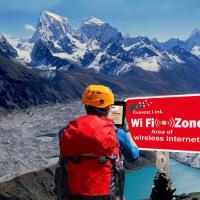
A: Lodges offer WIFI for a small fee, but connectivity can be slow and sometimes unreliable, especially at higher elevations. But the connection is good enough to message, etc. You can also buy an e-sim or Nepal Sim card for internet and add internet data to it.
Q: Can I pay with credit card or foreign currency?
A: On trek for spending money Nepalese cash is preferred. Some tea houses accept credit cards, but we suggest you tocarry cash for small expenditures. Legal currency exchange service is easily available in Kathmandu.
Q: Are laundry services available?
A: Laundry service is available in Namche Bazaar and Dingboche along the route. Service may take 1–2 days and is limited at higher altitudes.
Q: Should I carry my own medicines?
A: Yes, please bring personal medications. Guides also carry first aid kit and emergency medicines.
Q: Can I buy trekking gear in Nepal?
A: Kathmandu has well-stocked stores for branded and locally made trekking clothes, boots, and gear, though quality may vary. Except boots (which is better breaked in beforehand to avoid blisters) you can buy all trekking gears in Thamel, Kathmandu.
Q: How does Everest Base Camp compare to Kilimanjaro?
A: EBC is a trekking expedition with cultural and natural immersion, while Kilimanjaro is a high-altitude climb that can be completed faster but with more physical strain over fewer days.
Q: Why is Namche Bazaar called the “Sherpa Capital”?
A: It’s the main hub of Sherpa culture, trade, and mountaineering logistics in the Khumbu region.
Q: What makes Lukla Airport famous?
A: Known as one of the world’s most challenging airports, it has a short, sloped runway surrounded by mountains, making every flight an adventure.
Q: What’s the cultural significance of Tengboche Monastery?
A: Tengboche is the largest and ancient monastery in the Khumbu region, a spiritual center for Sherpas, and hosts the famous Mani Rimdu festival.
Q: Why do flights to Lukla depart from Ramechhap instead of Kathmandu?
A: Flights from Ramechhap are shorter and less prone to Kathmandu weather delays. It’s an alternative for more reliable flight schedules.
Q: Will someone meet me at the airport?
A: Yes, a representative will welcome you and assist with transportation to your hotel or onward travel.
Q: Does the trek include meals?
A: Most itineraries include breakfast and dinner at tea houses. Lunch is along the trail in some local restaurants.
Everest Base Camp Trek is a moderately difficult trek with several ups and down in the course. However, it does not need any technical or climbing expertise. Trekkers need to pass high pastures rough terrains, long suspension bridges, and river gorges to complete the journey.
Everest Base Camp is elevated at 5,364 meters / 17,599 feet above the sea level. However, trekkers reach up to 5,643 meters/18,514 feet, Kalapatthar for the mesmerizing sunrise and sunset views.
Spring (March, April, May) and autumn (September, October, November) are the peak months for Everest months. Although it is possible to trek in mid-February and late September too.
Generally, the journey to Everest Base Camp Trek takes 12 days to complete. As the distance is 130km round trip, Trekkers spend 8 days to ascend and 4 days to get back down. The whole journey completes within 14 days. However if, Kathmandu Sightseeing and a Spare day are added to the itinerary, may extend up to 16 days.
Several passes are possible via Everest Passes. If you prefer more adventurous journeys, can extend the trip to Everest High Pass Trek that extends to 20 days. Adjoining Everest Base Camp Trek with Gokyo Lakes Trek consumes 19 days to be completed.
The journey to Everest Base Camp passes via different settlements of Sherpa, camping grounds, lustrous backwoods of Sagarmatha National Park, and witnessing the distinct Himalayan fauna. Throughout the trek, one can pass through incredibly isolated spots with magnificent views of the mountain panoramas.
Way up: Kathmandu – Lukla – Phakding – Namche Bazaar – Tengboche – Dingboche – Lobuche – Gorak Shep – EBC/ Kalapatthar
Way down: EBC/ Kalapatthar– Gorek Shep – Pheriche – Tengboche – Namche – Lukla – Kathmandu
Everest Base Camp Trek is possible in both ways trek in a group or independently. Most of our clients prefer to trek in the organized treks because;
In case of emergencies, guides contact immediately to the respective company for the emergency evacuation. In need helicopter rescue can be done as soon as possible.
Basically, you need to have two permits to Trek Everest Base Camp;
Yes, you need to have insurance for your safety. You should buy medical and mountain evacuation insurance for trekking up 5,500m. We highly recommend you to buy an insurance policy in your country make sure that your insurance cover helicopter evacuation if in case when you are on the trek up to 5500m
Of course, it is possible to get a bottle of mineral water during the trek. Most of the teahouses and restaurants facilitate with bottled or purified water. However, with the elevation, the price of everything rises.
Even if you don’t want to buy the water; there are a plethora of sources of water throughout the trail and tea houses where you can fill up your bottles and use water purification tablets to make it safe to drink.
It depends whether you take a porter or not. Taking a porter, you need not carry anything except your personal belongings. You carry only our personal valuable good as a small day-pack filled with fleece jacket, waterproofs, warm hat, sunhat, sun-cream, water bottle, first aid kit, and camera and water purification tablets with you in your day pack.
You can hoard the needless things that you are not going to use during the trek, can leave at our hotel in Kathmandu while are on trek. Trekking without porters may add an extra burden to your trip. You need to carry all the gears, equipment, and clothing needed in the Himalayan journey.
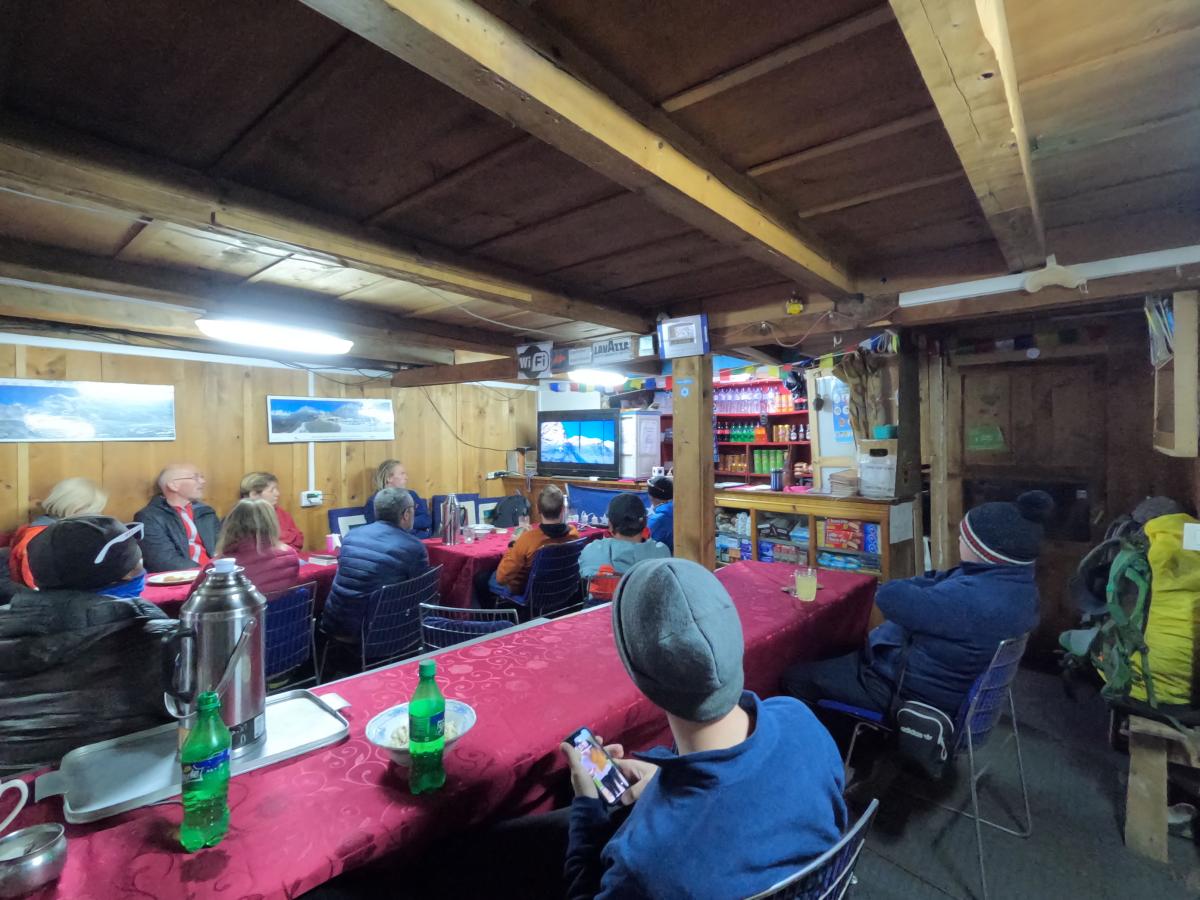
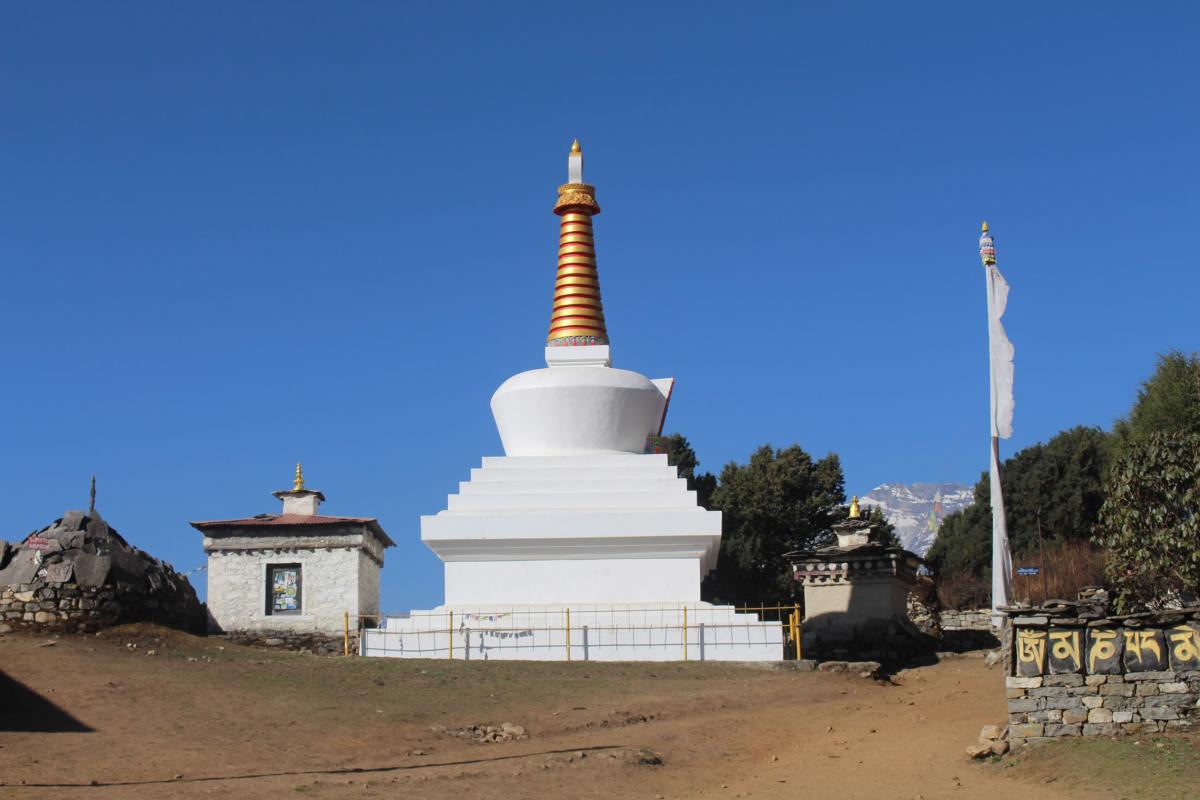
Me and my son did EBC trek with Holy Mountain Treks on November 2018. We had the most unforgettable and exciting trip from beginning to end all made possible by the professional and meticulous service provided by Holy mountain team. Our guide Ram who met us at the airport was attentive to our every needs and he ensured we had a very safe, exhilarating and memorable time in the mountains. He continually shared his knowledge and many years of experience of the region and Sherpa culture, which we loved. Our porter Kanchha was also very friendly. The trek was challenging in parts but this was surpassed by the breathtaking surroundings and encouragement from Ram. This was our first trip to Nepal and we will definitely be back and we will definitely be trekking with Holy Mountain treks again. We can only give them the highest recommendation!! Many many thanks, Ethan Miller Japan
Just over a year ago I was lucky enough to have the opportunity to go trekking in Nepal. On arriving I stayed at the Kathmandu Boutique hotel which was absolutely amazing. A few days later I booked my 16 day trek through the hotel and was introduced to my guide Ram. Til this day I call Ram a great friend we had lots of laughs and he made the experience that much better for me. He was extremely knowledgeable on the routes and the mountain range and could answer any of my questions. All in all I highly recommend Ram and his company to make your experience in Nepal that much better!!

Me and my friend Julia booked this trek after a short communication with Parshu. Our guide Ram was terrific. He answered all our questions perfectly. He was always concerned to make us safe, and comfortable. Our porter Krishna was very helpful and strong. He carried our duffle bags throughout the journey. The flight to Lukla was thrilling. In the early days, I felt a bit uneasy due to climate change. After acclimatizing in Namche Bazaar, I felt comfortable. Namche is the trading hub in the Khumbu region where numerous Sherpa are engaging in business. We bought some trekking gears there and marched ahead. The view from Kalapatthar was excellent. We could see Mt. Everest, Nuptse, Lhotse, Icefall, and glacier vividly. Food, accommodation, services, pace, views, trekking team were better than expected. So, we highly recommend Holy Mountain Treks and Ram for touring and trekking in Nepal.
I trekked Everest Base Camp trek with Puja in May 2019. As a female was worried about the journey as I was alone to trek. I emailed some companies and got an immediate response from HMT. They agreed to offer me a female guide. Then I booked the trek. Puja, my guide became my friend at first meet. She is an informative, knowledgeable, courageous lady who responded to all my queries in the journey. She checked me several times if everything is perfect. My porter Hari was patient, helpful, and ever-smiling. Although I could not see Everest from the lower elevations due to the hazy weather, I got panoramic views of it and its neighboring peaks when I reached Kala Patthar. You should never miss the first rays of sun over the Himalayas from this vantage point. As the journey was comfortable, the company was very responsive, the service was unforgettable, the staffs were hospitable and friendly, I never hesitate to recommend this company.
One of the most amazing adventures of my life-EBC Trek gave me and my friends the best experience. The sceneries, people, and their culture, and the animals were diverse. Our guide Ram was very helpful, kind, and knowledgeable. He kept our needs and satisfaction is the top priority. Next, the flight from and to Lukla was a thrilling experience. I was feeling that I am in the next world throughout the journey as every aspect and moment was breathtaking. I must say that it was my life experience and traveling to Nepal and trekking in Everest is not enough by visiting once only.
My father and I trekked in Everest with Holy Mountains in March 2019, which was a wonderful experience. Tour manager Parshu was diligent, responsive, and very co-operative. My guide Prakash was professional, efficient, and helpful. He always kept our needs as a priority. He is dedicated to making our journey safe and comfortable. The sunrise view over Mt. Everest was magnificent. The mountains were gleaming in front of us. I could imagine if I were on the top of the Everest reaching its base. Perfect Experience ever!!!!
We completed a 16 days EBc trek organized by Holy Mountain Trek. The tour manager Parshu responded to our queries as immediately as he could. From arrival to departure, his team took amazing care of us. The views were simply terrific. The guide was amazing with a plethora of information about topographies, cultures, and Himalayas of Nepal. Our porter Krishna was funny and ever-smiling. Highly recommended all….
This was one of the once-in-a-lifetime trekking experiences. The entire trek cannot be covered in even a hundred thousand words. Suffices to say that you should undertake it if you haven’t till now. The arrangements were fabulous; the trek unforgettable though extremely demanding physically and the beautiful country we passed through was amazing, to say the least. Reaching the Base Camp of the tallest peak of the world was a sight and a different level of experience. If you love unspoiled nature, forests, birds, water, and mountains then don't miss this. Prepare well and please hire a guide and porter. Several agencies in Kathmandu arrange these hikes but we recommend you to trek with Holymountain Treks as they offer quality and affordable services.
Last year, we trekked the base of tallest peak of the world- Mt. Everest. In course, we witnessed the sheer beauty of the diverse Himalayan landscape as you hike through remote villages, fairy-tale forests, vast moorlands cut by cascading rivers and the blue-hued peaks of base camp as they glow under starlight! We could experience a magical sunrise over the Annapurna ranges from the spectacular heights of Kalapatthar(5545m)– an early morning hike to this prime spot well worth the effort. Choosing the right company- Holy Mountain by an experienced trek leader along with assistant guides and porters, who did not only gave us all the support and guidance we required along the way, but also introduced us to the rich local Sherpa culture.
Sunny days, perfect views of the mighty peaks, BEST sunrise view from Kalapatthar, step on the foot of Everest, interaction with the Everest summiteers were some of the best things of Everest Base Camp Trek. Will be back to trek Annapurna with Krishna. Happy Trekking!!!
One of the best alternatives to Everest
Everest Base Camp Trek for Seniors and C
The daunting experience of landing on th
Are you in a hunt for pristine trekking
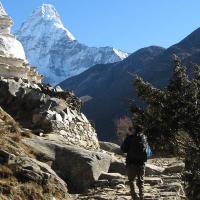
Everest panorama and Sherpa village trek
When individuals boast about the trek to
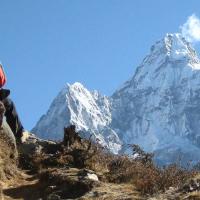
The Everest base camp luxury treks is an
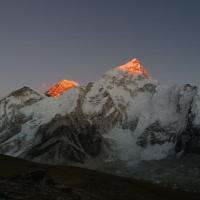
Are you eager to traverse the Everest Re
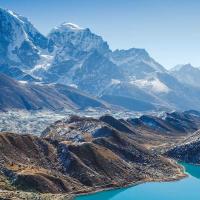
Gokyo Lakes Trek is the best alternative
Everest View Trek is a special package,
Everest High Pass trek, commonly known a
Taking about 24 days to complete, our Ji